Before the visible day
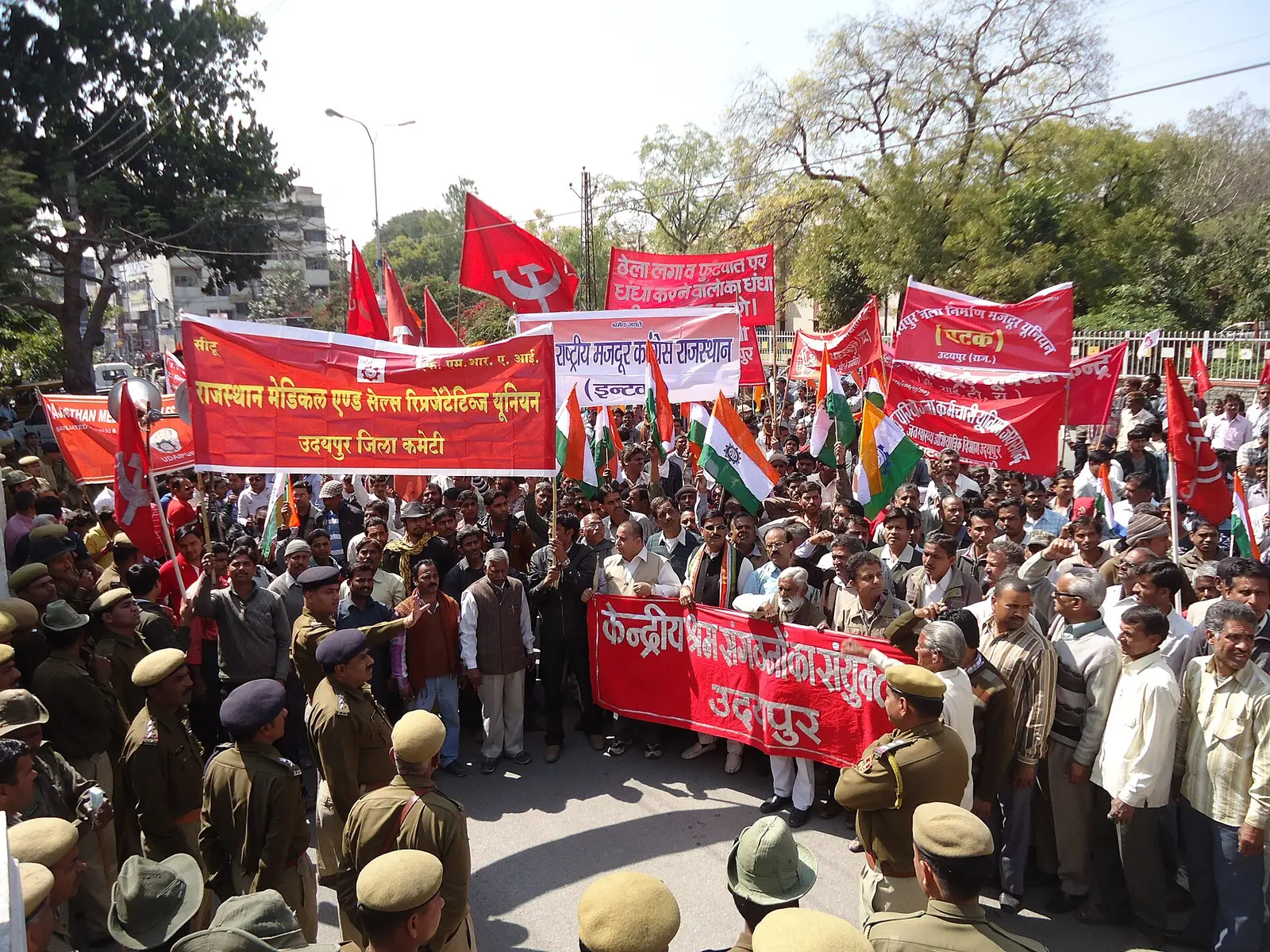
A general strike is a strange kind of protest. Nobody has to gather in one place. People just stop — the loom, the field, the counter — on the same morning, in enough places that a country cannot look past it. On 12 February, that is what happened.
The cause
Why people rose
- The new labour codes, unions say, quietly undo protections workers spent decades winning.
- People wanted social security that reaches everyone, not only those in formal jobs.
- The old grievances — pay, job security — hadn't gone anywhere.
What came before
This wasn't the first time. The codes had been fought in Parliament and on the street before, and the unions had walked out over them more than once. February was another round of a longer argument.
In their own terms
What people are asking for
- 01
Scrap the new labour codes, or rewrite them properly.
- 02
Social protection that covers everyone.
- 03
Economic policy that starts with workers and farmers.
The people
Who carried the demand
The union federations counted the turnout in the millions, across trades and states. We keep that breadth without pretending a number that was claimed is a number that was counted.
How the movement travelled
How it unfolded
- Before the strike
A joint call goes out
Trade unions and farm groups agree on one date and one message: stop the codes.
- 12 February 2026
The day itself
Marches, sit-downs and shuttered workplaces reported in more than 600 districts.
- After the strike
The demand outlives the day
The unions call it a step, not a finish. The codes are still there. So is the fight.
The accounts
Who is speaking, and what they said
Each account sits beside the part of the story it speaks to. Who is talking is part of what the words mean.
How organisers described it
The federations called it one of the largest turnouts of workers and farmers the country has seen, for decent work and a fairer deal. (Reported by ITUC–Asia Pacific.)
What was documented
Labour researchers logged protests against the codes across the country. (Catherwood Library, Cornell ILR.)
What power did
The institutional response
- The government's line held: the codes tidy up and modernise old, tangled law.
- Work on the rules under the codes carried on through the strike.
What remains unclear
What we still don’t know
- How many actually stopped work — the counts differ sharply.
- Whether the day moved the codes at all.
- How evenly the strike held from one trade to the next.
After attention left
What came after
A one-day strike is easy to report and easy to forget. The real test is quieter — whether the codes get changed, stalled, or simply enforced once everyone is back at work.
The evidence, attached
Where this came from
Every account above is drawn from public reporting. Each source links out, so you can read it yourself.
About this record
What this prototype is, and is not.
A prototype record of a nationwide day of action. The turnout figures are the organisers' own, and aren't checked independently here.
This is a demonstration of how a published Rise record would read. A real record would additionally pass independent corroboration, translation review, and safety and legal review before publication.