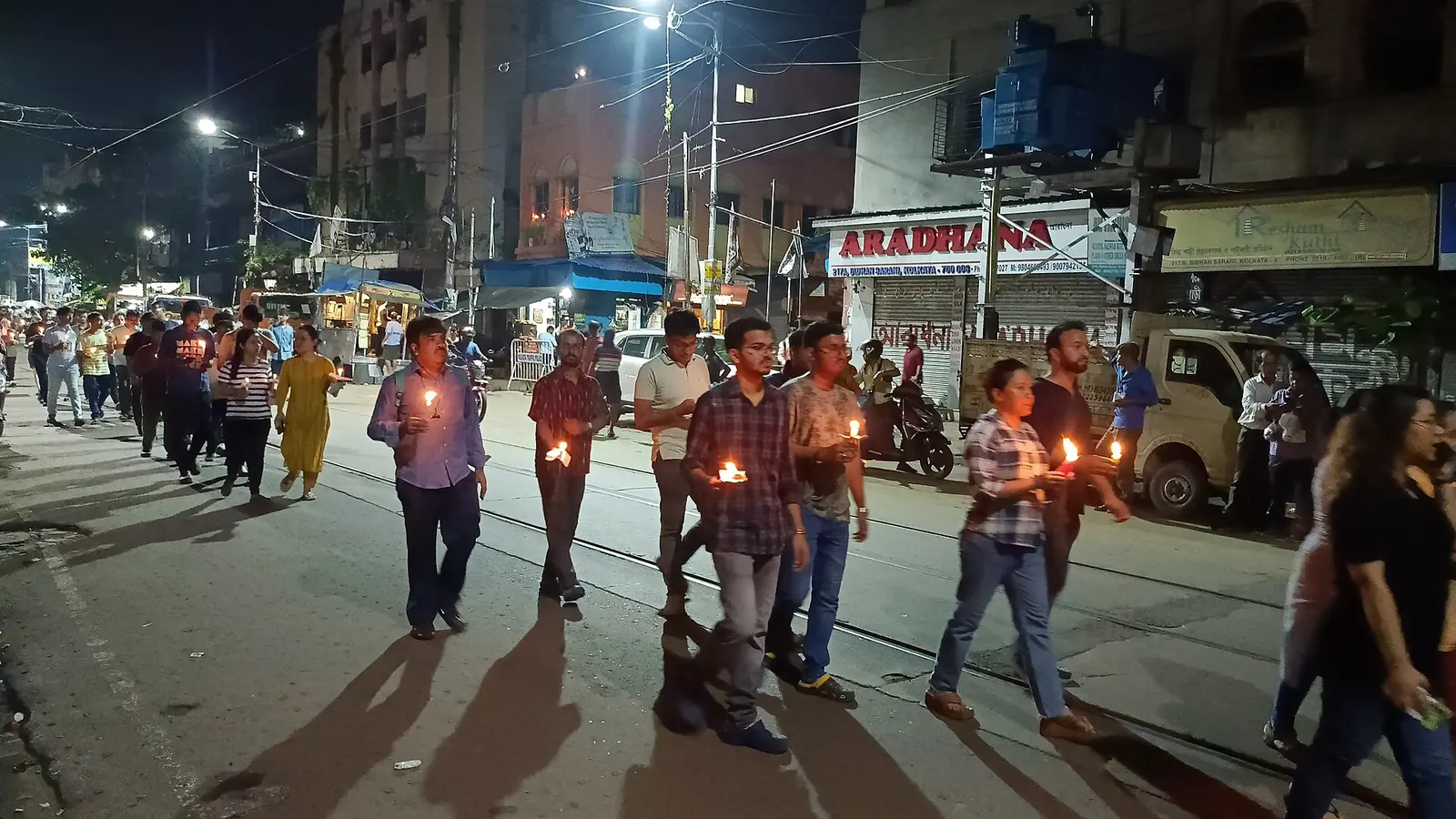
Before the visible day
She had gone to rest during a long hospital shift. She was raped and killed inside the place she worked. What came after was not only outrage but recognition — every doctor, every nurse, every woman who had ever felt unsafe on a night shift saw something of herself in it, and refused to let it pass as one more case.
The cause
Why people rose
- A doctor was raped and murdered on duty. The place that should have been safest was not.
- Staff had been saying for a long time that hospitals had no real security.
- The first official response felt more concerned with the institution's name than with them.
What came before
The complaints came before the killing — locks that didn't lock, corridors nobody watched, night shifts with no one to call. That is why the anger moved so fast.
In their own terms
What people are asking for
- 01
Justice in the rape and murder.
- 02
Security and safe conditions in hospitals — enforced, not just promised.
- 03
An end to the fear and the political meddling inside the wards.
The people
Who carried the demand
Junior and senior doctors, medical students, and — on the nights of the ‘Reclaim the Night’ marches — women filling the streets of Kolkata and other cities. We hold the collective demand and keep the victim's identity within what the law and plain decency allow.
How the movement travelled
How it unfolded
- 9 August 2024
A death on duty
A young doctor is raped and murdered while on duty at RG Kar Medical College and Hospital.
- 14–17 August 2024
Night marches, and a national strike
Women march to reclaim the night. On 17 August the Indian Medical Association calls a nationwide strike.
- 2–5 October 2024
A mega march, then a hunger strike
Junior doctors march on Mahalaya, then stop eating — an indefinite hunger strike.
- 19–22 October 2024
A deadline
They warn of a statewide walkout if the demands are not met by 21 October.
The accounts
Who is speaking, and what they said
Each account sits beside the part of the story it speaks to. Who is talking is part of what the words mean.
What they demanded
The Bengal junior doctors laid out ten points, from hospital security to an end to fear and interference on the premises. (Reported by Business Standard and NewsOnAir.)
The wider profession
The Indian Medical Association called a nationwide strike; senior faculty at the college resigned as a group. (NewsOnAir.)
The official process
The state and the courts took up the investigation and the running of the hospital; the criminal case moved through the system. (Attributed process, per reporting.)
What power did
The institutional response
- An investigation was opened and later came under the court's eye.
- The state met the doctors over their demands for safety.
- Police and doctors clashed during the Durga Puja days.
What remains unclear
What we still don’t know
- What the investigation ultimately found, and how fully it was made public.
- Whether the promised security actually held once the marches ended.
- How much the fear the doctors described has really lifted.
After attention left
What came after
A movement about safety is judged by one thing: whether the next person on the night shift is safer. We follow the trial and the reforms long after the marches, to see whether her death changed anything for the ones who came after.
The evidence, attached
Where this came from
Every account above is drawn from public reporting. Each source links out, so you can read it yourself.
About this record
What this prototype is, and is not.
A prototype record about a case of sexual violence. We handle the victim's identity with care, and the facts here rest on the linked reporting, not yet on Rise's own checks.
This is a demonstration of how a published Rise record would read. A real record would additionally pass independent corroboration, translation review, and safety and legal review before publication.